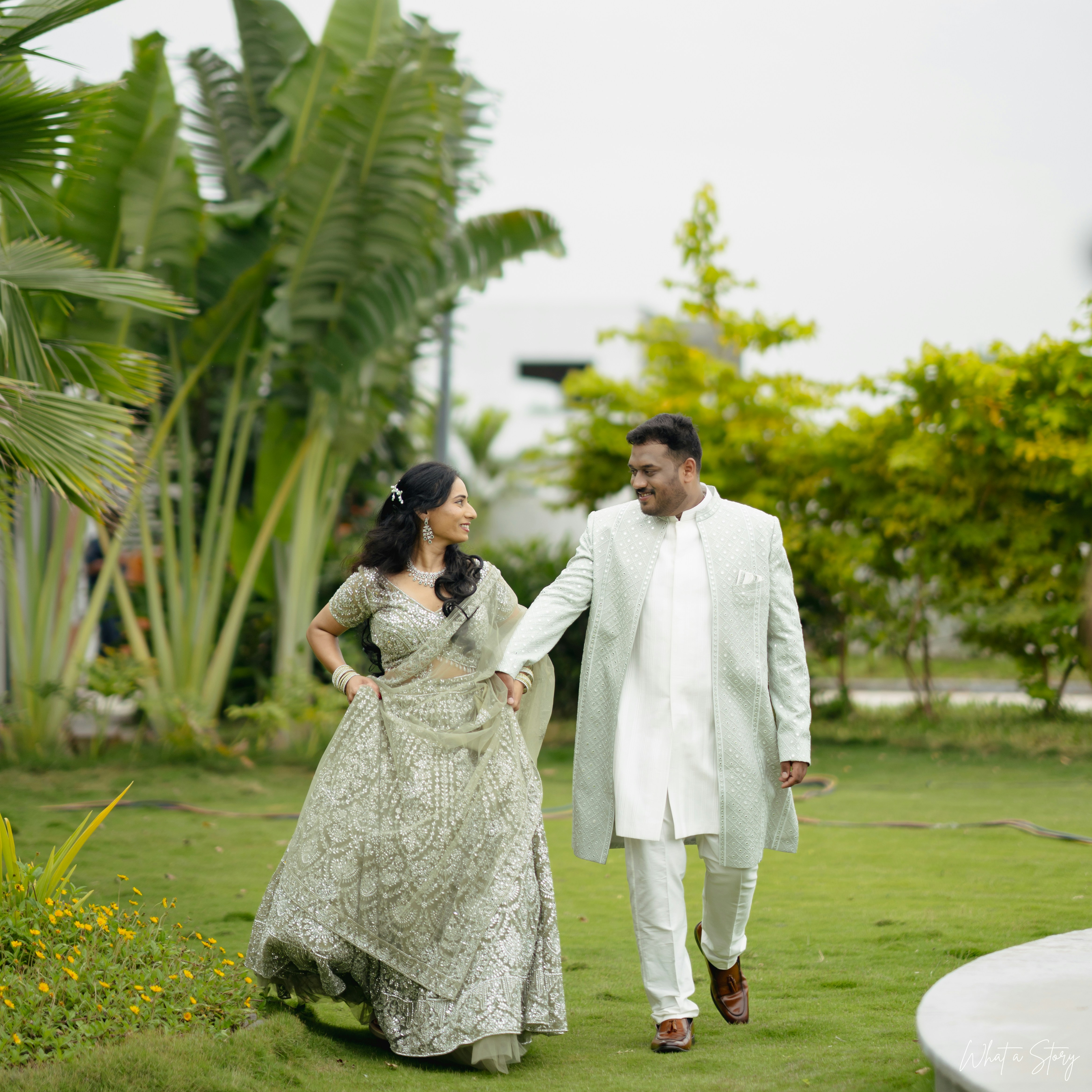
The Punjabi community has one of the most widely spread diasporas in the world. From Brampton to Birmingham, from Dubai to Melbourne, Punjabi families have built lives across continents — and taken their culture, their warmth, their food, and their approach to marriage with them every step of the way.
But that geographical spread creates a genuine challenge when it comes to matrimony. An NRI Punjabi family in Canada needs a match that understands both the bhangra at the wedding and the visa situation afterward. A family in Delhi looking for a Punjabi NRI groom for their daughter needs to know more than what is on a biodata — they need to understand what daily life actually looks like for their daughter once she relocates, and whether this family is genuinely the right fit.
This guide covers everything that matters in NRI Punjabi matrimony — the communities, the traditions, the right questions to ask, the things most guides do not mention, and how EliteBandhan's Punjabi matrimony service helps families navigate all of it with verified profiles, personalised support, and the cultural understanding that Punjabi matrimony actually requires.
Understanding NRI Punjabi Communities: Not One Size Fits All
Before the search begins, it helps to understand that "NRI Punjabi" is a broad label that covers several distinct communities — each with its own traditions, its own matrimonial norms, and its own understanding of what makes a compatible alliance.
Punjabi Sikh
The Punjabi Sikh community is among the most prominent and globally connected in the world. With strong roots in Punjab and significant populations in Canada, the UK, the USA, Australia, and the UAE, Sikh families approach matrimony with a deep respect for the Anand Karaj ceremony, community standing, and the Gurdwara as the centre of social life.
For Sikh families, the Anand Karaj — the Sikh wedding ceremony conducted in the presence of the Guru Granth Sahib — is not a cultural preference. It is the religious and emotional heart of the marriage. Any alliance must account for this. EliteBandhan's NRI matrimony service specifically notes Anand Karaj ceremonies honoured and celebrated across all Sikh NRI profiles — because this is a non-negotiable for most Punjabi Sikh families, and it should be built into the matchmaking process from the start.
Punjabi Khatri
The Khatri community — concentrated in Delhi, Punjab, and with strong NRI populations across the USA, UK, and Canada — brings a combination of entrepreneurial energy, professional ambition, and deep family values to matrimony. Khatri matrimony places significant emphasis on family reputation, professional standing, and community compatibility. The wedding traditions are celebratory and warm, with a multi-day format that is distinctly Punjabi in its energy and generosity.
Punjabi Arora
The Arora community shares significant cultural overlap with Khatri families and is prominently represented in both India and the NRI diaspora. Arora matrimony emphasises family background, education, and values alignment — and the community's strong presence in Delhi NCR, Punjab, and major NRI hubs makes it one of the most sought-after categories in Punjabi matrimonial services.
Jatt Punjabi
The Jatt community is perhaps the largest and most widely spread of all Punjabi sub-communities — with significant populations in Punjab, Haryana, Delhi, and across the NRI world particularly in Canada and the UK. Jatt matrimonycarries its own specific considerations around gotra compatibility, family land and agricultural heritage, community reputation, and the particular dynamics of a community that spans both deep rural roots and high urban professional achievement.
Punjabi Bhatia and Aggarwal
Bhatia and Aggarwal families from Punjab are prominent in business and trade — both in India and across the NRI world. Their matrimonial approach combines the warmth of Punjabi culture with the financial mindfulness and family integrity characteristic of trading communities. These families are well represented in EliteBandhan's Punjab matrimonial serviceand NRI network.
The NRI Punjabi Matrimony Challenge: What Makes It Different
Punjabi NRI matrimony is not simply matrimony with a longer distance. The geographic spread introduces a specific set of considerations that standard matrimony platforms — and many traditional intermediaries — are not equipped to handle.
The relocation question is central, not peripheral
For a Punjabi family in India considering an NRI alliance for their daughter, the question of where she will live after marriage is not a secondary consideration. It is the primary one. Which country? Which city? How large is the Indian community there? How easy is the visa and PR process? How close will she be to other Punjabi families? Will she be able to work? What happens when the next transfer order or visa renewal comes up?
These are not bureaucratic questions. They are the questions of a family that loves their daughter and wants to understand what her daily life will look like after the wedding.
A good NRI Punjabi matrimonial process addresses all of these before introductions are made — not after.
Cultural alignment across two worlds
Many NRI Punjabi professionals — particularly those who moved abroad for education or early career opportunities — carry a specific combination of identities: deeply Punjabi in their values, family orientation, and cultural pride, while also shaped by years of life in a Western country. They want a partner who can navigate both worlds — who is comfortable at a Diwali celebration and a corporate dinner, who understands what Gurbani means and what a visa renewal stress feels like, who can build a home that feels genuinely Indian even when it is geographically elsewhere.
Finding this kind of alignment requires a matchmaking process that goes beyond community and education filters. It requires conversation, assessment, and the human judgment that only a personalised service provides.
Family involvement across time zones
In Punjabi culture, marriage is emphatically a family affair. Parents, siblings, extended family — all play a role in evaluating and approving an alliance. When the NRI groom is in Toronto and the bride's family is in Ludhiana, coordinating the level of family involvement that Punjabi matrimony tradition expects becomes genuinely complex.
EliteBandhan's NRI matrimony service bridges both sides — the family in India and the professional settled abroad — so that neither side is navigating the search alone across time zones and geography.
What to Look for in an NRI Punjabi Match: The Real Checklist
Every Punjabi family has their own list of what they are looking for. But there are a few things that matter in NRI Punjabi matrimony specifically — things that go beyond the standard biodata considerations and get to the heart of whether an alliance will actually work.
Visa and immigration status — ask clearly and early
This is the question that polite families sometimes avoid and then regret not having asked. Is the NRI groom a citizen, permanent resident, or on a work visa? If it is a work visa, what are the renewal timelines and the path to PR? What does the bride's dependent visa situation look like, and how long before she can work independently?
For Punjabi NRI alliances involving the UK, Canada, USA, or Australia, the immigration picture is genuinely different in each country — and it affects the bride's life in practical, daily ways. A good matrimonial service addresses this as a standard part of the process. EliteBandhan's UK, Canada, USA, and Australia NRI services all incorporate immigration context into the matching process.
Community and family standing in the NRI location
A Punjabi family settled in Brampton, Ontario lives a very different NRI life from one settled in a small English town with few Indian families nearby. Understanding the community depth — the presence of a Gurdwara, Punjabi social networks, Indian grocery access, and festival celebrations — in the NRI groom's city of residence is a legitimate and important part of evaluating the alliance.
His relationship with his own family
How an NRI Punjabi groom maintains his relationship with his family in India — how often he visits, how involved he is in family decisions, how he balances his Indian roots with his life abroad — is one of the clearest indicators of how he will approach the marriage and his relationship with his new family. Observe this carefully before any formal commitment is made.
The bride's independence and career post-relocation
For educated, professionally accomplished Punjabi brides, the question of career continuity after relocation is increasingly important. A progressive NRI Punjabi family will actively encourage this and support it. Understanding the groom's expectations — and his family's expectations — around the bride's career is a conversation that should happen before the wedding, not after.
NRI Punjabi Wedding Traditions: The Celebrations That Cross Every Border
One of the things that defines Punjabi culture — in India and across the world — is the scale and joy of its celebrations. NRI Punjabi weddings, whether held in Canada, the UK, or India, carry these traditions with a pride and warmth that no amount of distance diminishes.
Roka
The formal beginning of the alliance. Families come together, sweets are exchanged, and the match is acknowledged publicly within the family circle. In NRI alliances, this often happens during the NRI groom's visit to India — and it sets the warm, family-centred tone that Punjabi matrimony is known for.
Chunni Ceremony
The groom's family visits the bride's home and formally presents her with a chunni — a dupatta — along with jewellery and gifts. It is the groom's family's way of welcoming the bride into their household before the wedding has even taken place. Emotional, intimate, and distinctly Punjabi.
Mehendi and Sangeet
Two of the most anticipated pre-wedding celebrations. The mehendi brings women of both families together with music, dance, and intricate henna designs. The sangeet — originally devotional singing — has evolved into a full evening of choreographed performances and celebration that NRI Punjabi families often describe as the highlight of the entire wedding week.
Anand Karaj
For Punjabi Sikh families, the Anand Karaj is the heart of the wedding — four laavan around the Guru Granth Sahib, each representing a stage of the journey toward God and toward each other. It is conducted in the Gurdwara, witnessed by the congregation, and carries a spiritual significance that the entire ceremony is built around.
Baraat and Milni
The groom's arrival with his procession — family, dhol, and celebration — followed by the Milni, where corresponding members of both families formally greet each other. It is the moment two families become one, and in Punjabi culture, it is done with complete presence and warmth.
Doli and Vidaai
The bride's departure. In Punjabi households — and particularly in NRI alliances where the departure also means a flight across continents — the Vidaai carries a weight that is genuinely felt by everyone present. The Doli is the bride's palanquin, now typically a decorated car, that carries her toward her new life. It is the moment that captures everything Punjabi matrimony means: the joy of a new beginning and the love of everything being left behind.
Why EliteBandhan for NRI Punjabi Matrimony
EliteBandhan's Punjabi matrimonial service was built with the specific needs of Punjabi families — in India and across the NRI world — firmly in mind.
Every profile is manually verified. Educational qualifications, professional background, family details, and community information are confirmed before any introduction is made. For NRI profiles specifically, immigration status is clarified as part of the onboarding process — so families are not discovering critical details weeks into a conversation.
A dedicated Relationship Manager works with every client from the start. The initial consultation goes beyond biodata — it covers the family's specific community background, the NRI location's lifestyle realities, the bride or groom's individual priorities, and what has or has not worked in previous searches. Every match presented after that consultation is deliberate, not algorithmic.
EliteBandhan's NRI Punjabi network spans the UK, Canada, USA, UAE, and Australia — with verified profiles from Punjabi Sikh, Khatri, Arora, Jatt, Bhatia, and Aggarwal families across all major NRI cities. Whether the family is in Delhi NCR, Punjab, or anywhere in the diaspora, the service is consistent: verified, personalised, and built for the seriousness that Punjabi matrimony deserves.
Confidentiality is absolute throughout. Profiles are not publicly visible, and personal details are shared only with verified, mutually interested parties at each stage.
The Right Match Is Out There
NRI Punjabi matrimony, at its best, is the coming together of two families who share the same pride in where they come from and the same excitement about where they are going. The distance is real. The cultural complexity is real. The importance of getting it right is real.
But so is the joy of a Punjabi wedding when everything comes together — when the right match is found, the families meet and immediately feel like they have known each other for years, and two people begin a life that honours everything their community has built and everything they are building together.
EliteBandhan's NRI Punjabi matrimony service is where that search begins — with verified profiles, cultural understanding, personalised support, and a commitment to finding not just a match, but the right one.
Begin your search at EliteBandhan.com — and find a Punjabi life partner who is right in every way that matters.