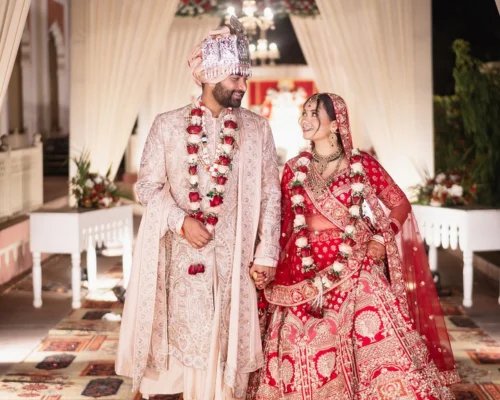
A doctor seems like a reassuring matrimonial match on paper. The education is clear, the career has direction, and the profession is respected. So it is understandable when a family begins with a simple preference: “We want a doctor for our son or daughter.”
But profession is only the first line of a much longer conversation.
Two people may have similar degrees and completely different ideas about time, money, family life, ambition or where they want to live. Meanwhile, a doctor and a non-medical professional may understand each other exceptionally well. The real question is not whether both profiles have “Dr” before the name. It is whether the two people can build a workable, respectful life together.
That is why a thoughtful search through Premium Doctor Matrimony should go beyond qualifications and specialisations. Here are the areas doctors and their families should discuss before treating any profile as a serious match.
1. Understand the schedule, not just the job title
“Doctor” can describe very different working lives. A resident handling night duties, a surgeon with unpredictable procedures, a dermatologist running a clinic and a radiologist working fixed hospital hours do not have the same daily routine.
Families should ask practical questions early:
How frequent are night shifts, emergency calls or weekend duties?
Is the current schedule temporary because of residency or likely to continue?
Can either person relocate if a fellowship, senior residency or new role arises?
What does meaningful time together look like during a busy week?
How does the person respond when plans change at short notice?
These are not unromantic questions. They prevent avoidable disappointment. A prospective partner does not need to work in medicine, but they do need an honest picture of the life that comes with it.
2. Look at career stage as well as qualification
An MBBS degree, an MD or MS, a super-specialisation and an established private practice represent different stages of a medical career. Each stage can affect income, location, workload and the timing of major family decisions.
Suppose one person wants to start a fellowship abroad while the other wants to settle near ageing parents in India. Both goals are reasonable, yet the match may become difficult if the issue surfaces only after engagement.
A sensible conversation should cover upcoming exams, further study, bond obligations, practice-building plans and the possibility of moving cities or countries. Good matchmaking does not rank one career path above another. It identifies whether the paths can move in the same direction.
3. Do not assume doctor-doctor is automatically easier
A fellow doctor may understand missed dinners, exhausting rotations and the emotional weight of patient care without much explanation. That shared context can help. It can also create a household in which both partners are stretched at the same time.
A partner outside medicine may offer a more predictable schedule and a different perspective, but only if there is genuine respect for the demands of clinical work. Elite Bandhan’s doctor service states that its search can include medical professionals as well as people from engineering, law, finance, business, civil services and other fields, depending on the member’s preference.
So the useful filter is not “doctor or non-doctor?” It is “Does this person understand, respect and fit the life we are discussing?” Families exploring adjacent professional backgrounds can also review the site’s pages for engineers, civil servants, lawyers and business families.
4. Talk clearly about location and relocation
Doctors cannot always move as freely as a profile might suggest. Hospital networks, licensing rules, patient bases, family-owned clinics and postgraduate training can tie someone to a place. Even a move from one Indian city to another may mean rebuilding professional relationships.
Before families progress, they should discuss:
where each person expects to live over the next three to five years;
whether either career has priority during a relocation decision;
whether private practice, a hospital position or an academic route is the long-term aim;
how close the couple wants to remain to parents; and
whether an overseas plan is definite, possible or merely aspirational.
For location-led searches, relevant Elite Bandhan pages include Delhi NCR, Mumbai, Bangalore, Chennai, Hyderabad and Pune. Families can also explore state-specific options such as Maharashtra, Karnataka, Uttar Pradesh and Rajasthan.
5. Compare expectations around family life
Marriage rarely operates in isolation from family, especially when parents have been closely involved through years of medical education and training. Yet involvement can mean different things to different households.
It helps to discuss living arrangements, care for parents, participation in family decisions, religious or community practices and expectations around festivals and social commitments. If both partners have demanding careers, they should also speak about household responsibilities and future childcare in specific terms.
“We will manage” is not a plan. Who can step in during an emergency shift? Would the couple consider paid childcare? Is one partner silently expected to reduce working hours? A respectful match makes room for both careers instead of assuming that one will eventually become secondary.
Families for whom faith, language or community remains important can explore Elite Bandhan’s relevant sections, including Hindu matrimony, Sikh matrimony, Jain matrimony, Muslim matrimony, Christian matrimony, Brahmin matrimony, Agarwal matrimony, Marwari matrimony and Reddy matrimony. Community can help narrow a search, but it should support—not replace—personal compatibility.
6. Discuss money without making income the whole story
Medical careers do not follow one financial pattern. A person may have a strong long-term trajectory while still completing training, repaying an education loan or investing heavily in a clinic. Another may earn well but carry substantial business risk through a hospital or practice.
Before marriage, both people should be comfortable discussing income stability, debt, savings, family responsibilities, insurance and attitudes towards spending. The purpose is not to conduct an interview. It is to understand how each person defines financial security and shared responsibility.
This is particularly important in high profile matrimony, where visible professional success can distract from everyday financial habits. A premium profile is not a substitute for a candid conversation.
7. Pay attention to emotional availability
Medicine demands composure, but professional competence does not tell you how someone handles conflict at home. Families often spend considerable time comparing qualifications and very little time noticing communication.
Does the person listen without becoming defensive? Can they apologise? Are they able to talk about stress, or do they shut down? How do they speak about colleagues, former relationships, domestic staff and people with less status? These small observations usually reveal more about married life than another line on a CV.
Doctors may also carry fatigue, grief or difficult clinical experiences home. A compatible partner need not act as a counsellor, but both people should be able to ask for space, care and support without shame.
8. Separate essentials from preferences
Every family has a wish list. The difficulty begins when all preferences are treated as non-negotiable. The search can become so narrow that potentially suitable people are rejected before a real conversation takes place.
Try dividing expectations into three groups:
Essentials: character, respect, marriage goals, core values and basic lifestyle alignment.
Important preferences: location, profession, community, language or family structure.
Flexible details: exact degree, height, narrow age bands, institution, city or a specific income figure.
The categories will differ for every person. What matters is that the doctor—not only the family—helps define them. A good Doctor Marriage Bureau or Professional Matchmaking service should work from considered priorities rather than an inflated checklist.
9. Treat verification and privacy as separate responsibilities
Verification is important in any matrimonial search, particularly when profiles include qualifications, employment, overseas status or private practice. Elite Bandhan says profiles in its doctor matrimony service undergo manual review covering identity, professional qualifications and relevant details. Its page also states that contact information is protected and shared after mutual interest and approval.
Even so, families should conduct their own due diligence before making a commitment. Confirm identity, marital status, education, registration or licensing where relevant, employment, address and any important financial or legal information. Meet more than once, involve both individuals in the decision, and never allow a premium label to replace personal judgment.
Privacy deserves equal attention. Ask how photographs and contact details are handled, who can view the profile and when information is shared. For senior clinicians, public figures and established medical families, discretion may be one reason to consider Premium Matrimony or a Premium Marriage Bureau for Doctor searches. It should still be supported by clear consent at each stage.
10. For NRI doctors, add licensing and immigration to the conversation
An NRI match brings another layer of practical questions. Medical licences do not automatically transfer between countries. A spouse may need examinations, supervised training or a fresh pathway before practising. Visa status, permanent residency, taxation and the willingness to return to India can also shape the couple’s options.
Families should confirm what is true today rather than relying on vague future plans. Where is the doctor licensed? Is the overseas position permanent or part of training? Can the other person work after relocation? Which country does the couple genuinely see as home?
Elite Bandhan has an NRI matrimony section and country-specific pages for the USA, UK, Canada, Australia and UAE. These are useful starting points for families whose search crosses borders.
What should a family ask before saying yes to a doctor match?
A first or second meeting need not feel like an interrogation. A few open questions can lead to a more natural conversation:
What part of your work matters most to you?
What does a difficult week look like, and how do you recover from it?
Where would you like to live three years from now?
How do you imagine sharing family and household responsibilities?
What role do parents and extended family have in major decisions?
Are further study, fellowship or relocation likely?
How do you prefer to handle disagreement?
What would make you feel supported by a spouse?
Listen to the substance of the answers, but also notice whether the other person is curious in return. Compatibility is not one family assessing another. It is a two-way process.
Where professional matchmaking can help
Large matrimony portals are useful for people who want to browse independently. A managed service serves a different need: narrowing the search, coordinating conversations and bringing context into the shortlist.
For a doctor with limited time—or a family managing a search across cities, communities or countries—a dedicated relationship manager can help turn broad preferences into more relevant introductions. Elite Bandhan describes this as a process of understanding specialisation, career commitments, family values, lifestyle preferences and marriage goals before shortlisting profiles and coordinating introductions.
That distinction matters when comparing a generic platform with Premium Matrimony for Doctor profiles. The value should not be measured by how many biodatas arrive in a week. It should be measured by whether the introductions respect the priorities agreed at the start.
No service can promise chemistry, marriage or a fixed timeline. Phrases such as Best Matrimony for Doctor, Best Elite Matrimony, Best Matrimony India or Premium Matrimony India are common search terms, not guarantees of outcome. Families should judge any Marriage Bureau for Doctor professionals by its process: how it verifies information, protects privacy, incorporates feedback and handles consent.
The profession may open the door; compatibility decides what happens next
A medical degree can tell a family something about a person’s training and career. It cannot tell them how that person communicates, shares responsibility, treats family, manages money or responds when life refuses to follow a schedule.
The most sensible approach to Elite Matrimony for Doctor profiles is therefore a balanced one. Respect professional achievement, but remain curious about the person behind it. Consider career stage, daily rhythm, geography, family values, emotional maturity and future plans together.
Families seeking an Elite Bandhan Doctor match can begin with the doctor matrimonial service, review the membership options, or contact Elite Bandhan to understand how its process works. Take the time to ask better questions. In marriage, a thoughtful shortlist is far more useful than a long one.
Frequently Asked Questions
Is marrying another doctor always the best choice for a doctor?
No. Another doctor may understand clinical pressures more instinctively, but two demanding schedules can create practical challenges. A non-medical professional may be equally compatible if there is respect for the doctor’s work, shared values and agreement on everyday life.
What should parents verify in a doctor matrimonial profile?
Families should verify identity, marital status, educational qualifications, professional registration where relevant, current employment or practice, location and any material information that could affect the marriage decision. Verification by a platform should complement, not replace, the family’s own checks.
Why does career stage matter in doctor matrimony?
Career stage affects working hours, income, location and future plans. Residency, specialisation, fellowship and private practice each bring different commitments, so couples should discuss what the next few years are likely to involve.
Can Elite Bandhan include matches outside the medical profession?
According to its doctor matrimonial page, Elite Bandhan can consider professionals from medicine as well as engineering, law, finance, business, civil services and other fields, based on the member’s preferences and compatibility priorities.
What should NRI doctors discuss before marriage?
They should discuss licensing, immigration status, work rights for the spouse, the intended country of residence, possible return to India and how both careers would continue after relocation.
How is premium doctor matrimony different from a self-service app?
A premium, managed service may provide personalised shortlisting, coordinated introductions and relationship-manager support. Families should assess the actual process, privacy controls and verification practices rather than relying on labels such as Elite Matrimony, Best Matrimony or Premium Doctor Matrimony alone.