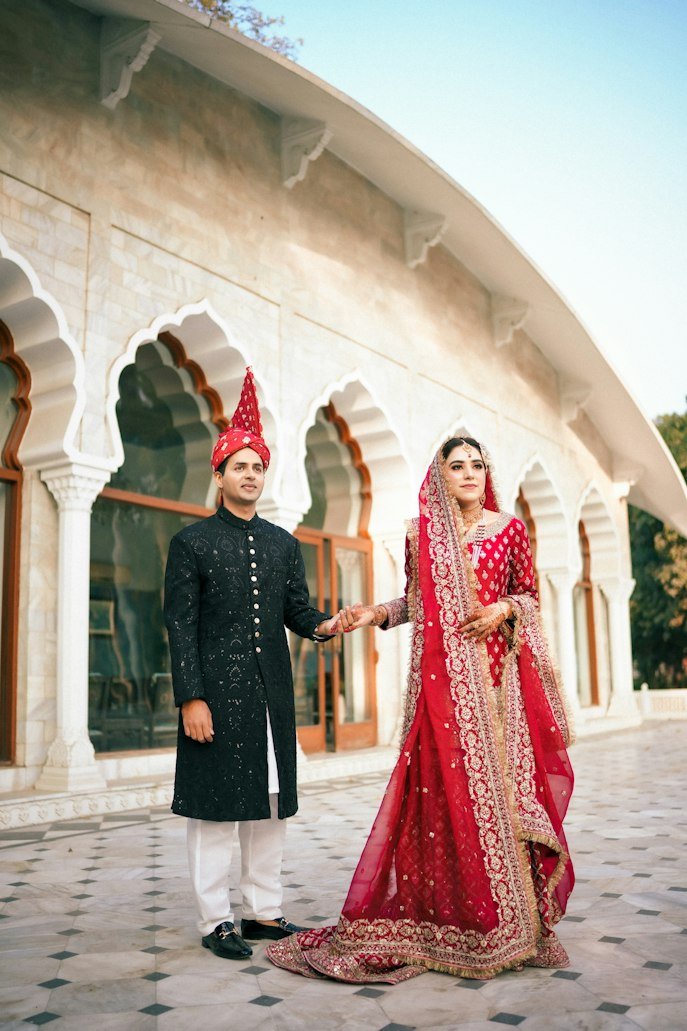
A cardiology resident in Dubai finishes a shift two hours late. Her mother in Hyderabad has been waiting since 9 p.m. to call about a profile everyone liked. By the time the resident showers, eats, and checks her phone, it's past midnight in India, and the moment has passed again, for the third week running. Nothing about the match itself has changed. The two families still like what they've read about each other. What keeps slipping is the fifteen minutes needed to actually talk.
That gap between "we have a good introduction" and "we've had a real conversation" is where a lot of NRI Muslim matchmaking in the Gulf actually gets stuck. It isn't always, or even usually, a shortage of suitable candidates. It's the mechanics of getting two exhausted, differently scheduled people and their families into the same conversation long enough to find out if they suit each other.
Getting a profile isn't the same as getting a conversation.
Access to introductions has gotten easier over the past decade. Matrimonial platforms, family networks, and dedicated matchmaking services can all put a reasonable set of profiles in front of a professional in Riyadh or Dubai within a few weeks. That part isn't usually the bottleneck, though it can still take longer than expected for someone with very specific preferences on sect, sub-community, or profession.
The harder part starts after that. A profile is a static thing: education, family background, a few photographs, maybe a short bio. Working out whether two people are actually compatible needs sustained attention, several real conversations, occasionally a video call where both sides can read tone and body language. That takes time and privacy, and for a doctor covering emergency shifts or an engineer against a project deadline, both are in short supply most weeks.
The scheduling problem is more specific than "different time zones"
The time difference between India and the Gulf isn't large on paper. Dubai runs about an hour and a half behind Indian Standard Time. Riyadh runs about two and a half hours behind. Neither sounds like much until you line it up against two people's actual weeks.
Say the Riyadh-based engineer is free most evenings after 8 p.m. local time, which lands around 10:30 p.m. in India, usually past the point when a prospective bride's parents want a call happening in their home. Say the Dubai-based doctor's only predictable free block is a Friday afternoon, which for her Mumbai-based match might be the one weekend slot already set aside for his own family. "Free after work" turns out to mean something different to a hospital resident, a site engineer, and the parents managing the conversation from India, and none of those schedules were built with matchmaking in mind.
There's also a privacy layer that gets underestimated. A doctor on a shared hospital call schedule, or an engineer in an open-plan site office, doesn't always have somewhere private to take a long personal call between 2 and 6 p.m. local time. The theoretical time-zone overlap and the practically usable overlap are two different numbers.
Family involvement helps, and it also adds coordination
Parents and relatives managing introductions on behalf of a professional abroad usually aren't trying to slow things down. They're often the ones doing the early screening work, checking family background, discussing religious practice, sometimes fielding three or four conversations with different relatives before the couple involved has spoken at all.
Where this tends to cause friction is duplication. If an uncle in Jeddah, a sister in Delhi, and the candidate himself are all messaging separately about the same introduction, feedback arrives at different speeds through different channels, and nobody's quite sure who's waiting on whom. A family that's agreed in advance on one point of contact, and on roughly how quickly they'll get back to each other, tends to move through this stage faster than one that hasn't, regardless of how enthusiastic everyone is about the match.
None of this means family involvement is the obstacle. For many candidates, having parents pre-screen for religious compatibility, family reputation, and long-term intentions is exactly the reassurance they want, and it can rule out an unsuitable match before either side invests real time in it. The friction shows up specifically around coordination logistics, not around whether families should be involved at all.
What compatibility actually needs to cover
Profession and location are the easy filters. What decides whether two people can build a life together usually sits one layer down.
If one partner is a doctor in Riyadh and the other is finishing a residency in Chennai, whose career determines where they eventually live, and does either expect the other to pause training or find work in the new city? Religious practice matters here too, and it's worth discussing specifically rather than assumed: two people can both identify as observant and still hold different expectations around daily practice, dress, or extended family involvement in religious decisions. None of that should be assumed from a profile description of "practicing" or "moderate."
Timeline matters as well. A family expecting an engagement within a couple of months and a candidate who wants six months of getting to know each other before any decision aren't necessarily incompatible people, but they need to say so early rather than discover the mismatch three conversations in.
A workable way through the scheduling problem
A few adjustments tend to make more difference than they sound like they should, mostly because they replace guesswork with an actual agreement.
Two people can agree on two realistic weekly call windows and one backup slot, rather than trying to find time spontaneously each week. Sharing broad availability, evenings after 8, weekend afternoons, without needing to explain hospital rosters or project deadlines in detail, keeps the conversation practical without oversharing about work. On the family side, naming a single point of contact for each side cuts down the duplicate-message problem considerably. And it helps to agree together, candidate to candidate, on when relatives join a conversation and when it's just the two of them, rather than leaving that ambiguous.
A reasonable feedback window, a week to ten days after a call, gives both families room to talk it through without either side feeling either rushed or ignored. None of this guarantees a match works out. It just means that when it doesn't, the reason is genuine incompatibility rather than a missed Tuesday call.
Where a relationship manager actually helps
A lot of what slows this process down is coordination work: chasing availability across two time zones, keeping family expectations aligned, making sure a profile isn't shared further without permission. This is the part Elite Bandhan's Muslim matchmaking service is built to handle. A dedicated relationship manager works from both sides' actual availability rather than assuming a shared calendar, screens and shares profiles only with consent, and stays involved through introductions and family meetings so fewer messages get lost between an uncle, a sister, and a busy hospital resident.
That kind of support helps with the logistics. It doesn't replace the two people involved deciding, on their own terms, whether they're actually compatible, and no service should claim otherwise.
If you're based in the Gulf and exploring options, Elite Bandhan's coverage extends across Muslim matrimonial matches in the UAE and Muslim matrimonial matches in Saudi Arabia, with relationship managers who work around the realities of a Gulf-based schedule rather than a standard nine-to-five. A conversation with a relationship manager about your specific availability and preferences is a reasonable next step if the coordination itself, more than the search, has been the sticking point.
Frequently asked questions
Why can NRI Muslim matchmaking feel slow even when profiles are available? Having access to suitable profiles isn't the same as having time to properly get to know someone. Between demanding work schedules, limited overlapping free hours, and family members coordinating from a different time zone, a promising introduction can take weeks to turn into an actual conversation, even when both sides are genuinely interested.
How can professionals in Dubai or Riyadh coordinate calls with families in India? Agreeing on two fixed weekly windows, such as a weekday evening and a weekend afternoon, plus one backup slot, removes most of the back-and-forth. Sharing general availability rather than detailed work schedules keeps things simple, and confirming the same slot a day ahead avoids last-minute cancellations on either side.
How much family involvement should there be in an introduction? That depends on what both people and their families are comfortable with. Family involvement often helps with early screening on background and religious compatibility, but it works best when everyone agrees in advance on one point of contact per side, so feedback doesn't get delayed by duplicate conversations across several relatives.
What should Muslim doctors and engineers discuss before progressing with a match? Beyond profession and location, it helps to cover who relocates if the couple ends up in different cities, how each person practices their faith day to day rather than assuming from a label like "practicing," and what timeline each family expects, since a mismatch on pace causes more friction than most other disagreements.
Can personalised matchmaking support busy NRI professionals? A dedicated relationship manager can handle a meaningful part of the coordination, working around shift patterns and time zones, screening profiles before they're shared, and keeping communication between families organised. It can't replace the two individuals deciding for themselves whether they're compatible, but it does remove a lot of the logistical friction that causes good matches to stall.
Ready to talk through your specific schedule and preferences? Get in touch with Elite Bandhan for a conversation with a relationship manager who works with NRI professionals across the Gulf.