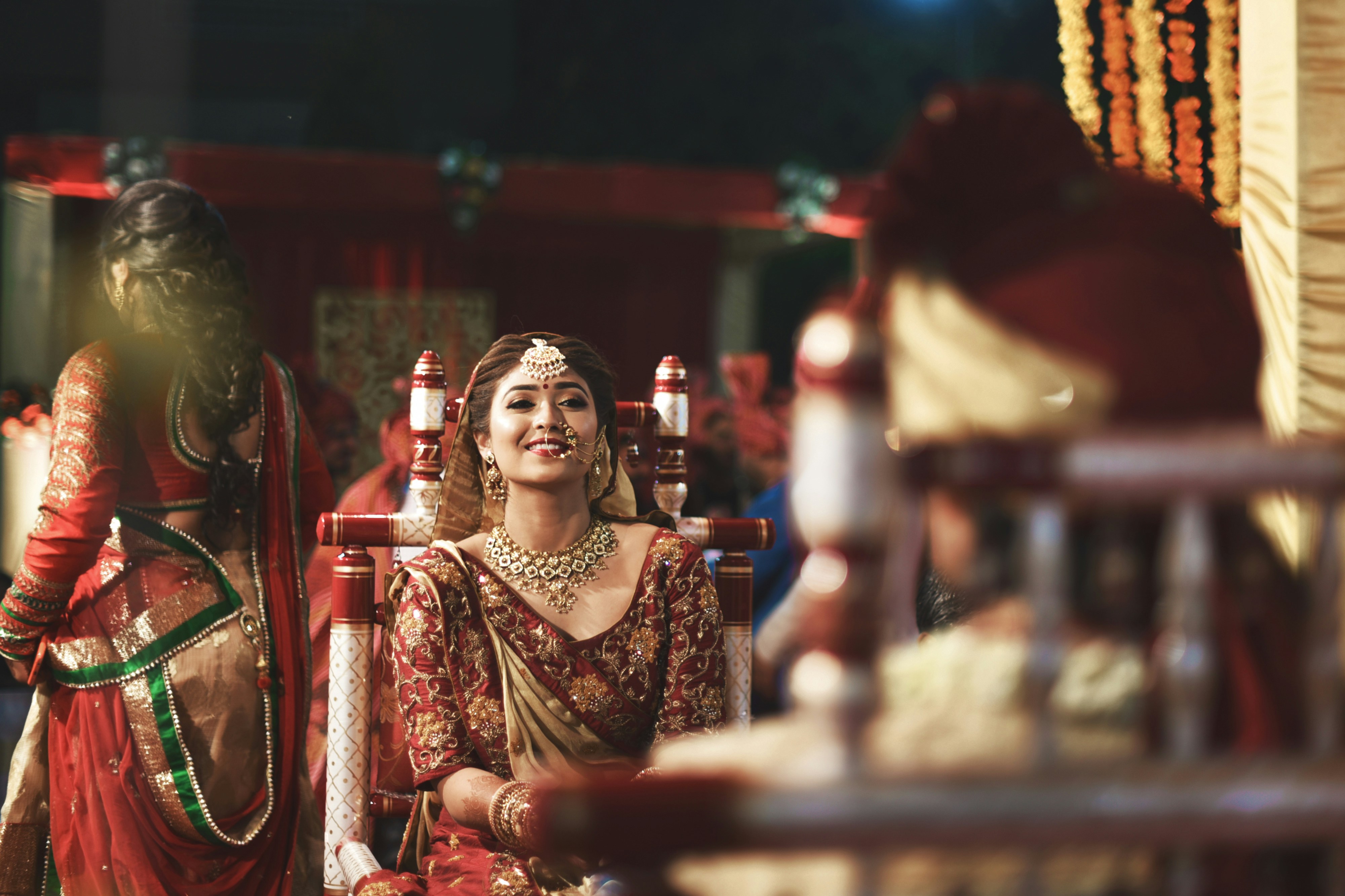
Hindu matrimony is not one thing. It never has been.
It is a Brahmin family in Banaras consulting a pandit about kundali compatibility before a single biodata is shared. It is a Rajput household in Jaipur where the boy's lineage is traced back three generations before any alliance is considered. It is a young Agarwal professional in Mumbai who wants to meet the person properly before committing, but still wants his parents' approval before he does. It is an NRI Kayastha family in New Jersey searching for a match that understands where they come from, even if they have built their life ten thousand kilometres from home.
Hindu matrimony spans hundreds of communities, dozens of regional traditions, multiple languages, and centuries of practice — and it is still evolving, in real time, in homes across India and the Indian diaspora every single day.
This guide covers all of it. Who the communities are, what the traditions mean, how matchmaking actually works today, and how families navigating Hindu matrimony in 2025 are finding serious, compatible, verified alliances — without losing what matters most in the process.
The Foundation of Hindu Matrimony: What Has Never Changed
Before anything else — before communities, rituals, or kundalis — Hindu matrimony rests on one foundational idea: marriage is not just the union of two individuals. It is the joining of two families, two lineages, and two ways of life.
This idea shapes everything. It explains why family involvement remains central even in progressive households. It explains why community background, gotra, and reputation carry so much weight. It explains why the process of finding a match is rarely a solo exercise — because the people who know you best, who have watched you grow, who understand your family's values from the inside, are considered essential participants in one of the most important decisions of your life.
This does not mean individual choice is disregarded. It means individual choice is exercised within a context — and that context is the family.
For modern Hindu families navigating premium Hindu matchmaking, this balance between individual preference and family involvement is perhaps the defining challenge — and the defining opportunity — of contemporary matrimony.
Hindu Communities and What Makes Each Alliance Unique
Hindu matrimony encompasses an extraordinary diversity of communities, each with its own traditions, its own expectations, and its own understanding of what makes a good match. Here is a look at the major communities and what families should understand about each.
Brahmin Matrimony
The Brahmin community is among the most diverse within Hindu matrimony — spanning Iyer and Iyengar families in Tamil Nadu, Saraswat Brahmins in coastal Karnataka and Maharashtra, Kashmiri Pandits, Bengali Brahmins, North Indian Brahmin families from UP and Uttarakhand, and many more. Each group has its own gotra system, its own dietary customs, and its own regional marriage traditions.
What unites Brahmin matrimony across all sub-groups is the emphasis on education, intellectual compatibility, and values alignment. Kundali matching is taken seriously in most Brahmin households — as is the question of whether two individuals share a similar orientation toward knowledge, tradition, and family responsibility.
Rajput Matrimony
Rajput alliances carry the weight of history in a way few other communities do. Clan lineage, ancestral reputation, and family honour are not abstract concepts in Rajput matrimony — they are active considerations in every match-making discussion. Rajput families typically trace lineage through the clan system, and cross-clan marriages follow specific conventions that vary by region.
The Rajput wedding is among the most visually grand in all of Hindu matrimony — with ceremonies that often span several days, elaborate rituals specific to the clan, and a strong emphasis on community participation. But beneath the grandeur is a community that takes compatibility, character, and family standing extremely seriously.
Agarwal Matrimony
The Agarwal community — primarily Vaishya, with deep roots in business and commerce — brings its own precise and thorough approach to matrimony. The 18 gotra system is non-negotiable, and family reputation in the business community carries significant weight alongside individual qualifications.
Agarwal matchmaking today reflects a community in transition — deeply traditional in its respect for family process and community norms, but increasingly progressive in its expectations for educated, professionally accomplished brides and grooms who bring both values and ambition to the alliance.
Kayastha Matrimony
Kayasthas are known for their historical connection to learning, administration, and the arts — and their matrimonial culture reflects this. Kayastha matrimony places strong emphasis on education, cultural refinement, and professional standing. The community spans North India, with particularly strong concentrations in UP, Bihar, Delhi, and West Bengal — and each regional group has its own specific customs around marriage.
Khatri Matrimony
The Khatri community — concentrated in Punjab, Delhi, and Haryana — has a strong tradition of entrepreneurship, military service, and professional achievement. Khatri matrimony emphasises family reputation, professional stability, and community standing, with a warm and celebratory wedding tradition that reflects Punjabi culture at its most generous.
Punjabi Matrimony
Punjabi Hindu matrimony is distinctive for its energy, its warmth, and the sheer scale of its celebrations. From the sangeet to the anand karaj to the reception, Punjabi weddings are events that the entire community participates in. But behind the celebrations is a community that takes family background, financial stability, and values alignment very seriously when evaluating an alliance.
Marwari Matrimony
The Marwari community — predominantly from Rajasthan, now spread across India and the world through trade and business — brings a combination of deep tradition and sharp practical intelligence to matrimony. Marwari matchmakinginvolves careful evaluation of family business standing, community reputation, and gotra compatibility. Marwari weddings are known for their elaborate multi-day ceremonies and the extraordinary hospitality extended to every guest.
Jain Matrimony
While Jains form a distinct religious community, they share significant cultural overlap with Hindu matrimonial traditions — particularly among Oswals, Porwals, and Shrimali communities. Jain matrimony places particular emphasis on religious observance, dietary adherence, and community standing. The non-violence principle that runs through Jain culture extends to how families approach matrimony — with care, patience, and a deep respect for the significance of the decision.
Kundali Matching: What It Is, What It Tells You, and What It Does Not
No guide to Hindu matrimony is complete without an honest discussion of kundali matching — because it remains one of the most misunderstood aspects of the process, even among families who take it seriously.
A kundali — or birth chart — is a map of the planetary positions at the exact time and place of a person's birth. In Hindu matrimonial tradition, the kundalis of two prospective partners are compared across a system called the Ashtakoot Milan, which evaluates eight dimensions of compatibility and assigns a score out of 36.
These eight dimensions cover mental compatibility, character, longevity, fortune, affection, temperament, health, and sexual compatibility. A score of 18 or above is generally considered acceptable. Above 24 is considered good. Above 30 is considered excellent.
Beyond the Ashtakoot score, kundali matching also examines specific planetary combinations that Hindu tradition considers important for the wellbeing of the marriage — including Mangal dosha, the presence of which is taken seriously in most Hindu communities and requires either a specific remedial match or ritual remediation before the alliance proceeds.
It is worth being honest about what kundali matching does and does not do. It is a tool for assessing certain types of compatibility through an ancient framework — and for many Hindu families, it provides genuine reassurance and a structured way of thinking about alignment between two people. What it is not is a substitute for the human work of knowing someone, understanding their character, and honestly assessing whether two people and two families are truly compatible in the ways that matter most.
The families who use kundali matching most wisely treat it as one input among many — important, taken seriously, but not the only question being asked.
Hindu Wedding Rituals: The Ceremonies That Mark a Lifetime
Hindu weddings are among the most ritually rich in the world. While specific ceremonies vary enormously by community and region, a core set of rituals is common across most Hindu matrimony traditions.
Roka / Engagement
The formal beginning of the alliance. Families come together, exchange sweets and gifts, and acknowledge publicly that the search has ended and the alliance is confirmed. It is intimate, family-centred, and sets the tone for everything that follows.
Haldi
Turmeric paste — mixed with mustard oil, milk, curd, and herbs — is applied to both the bride and groom at their respective homes by close family members. The ceremony is believed to cleanse and bless them before the wedding, and the intimacy of it — family gathered close, folk songs in the background — makes it one of the most emotionally genuine moments in the entire wedding process.
Mehendi
Intricate henna designs applied to the bride's hands and feet. The mehendi ceremony brings women of both families together the day before the wedding and is as much about bonding and celebration as it is about ritual.
Sangeet
Originally a gathering for devotional and folk singing, the sangeet has evolved in most Hindu families into a full evening of music and dance — a joyful bridge between tradition and contemporary celebration.
Baraat
The groom's wedding procession to the venue — traditionally on a white mare, accompanied by family, dhol, and festivity. The baraat is received by the bride's family, and the two households formally meet as one for the first time.
Jaimala
The exchange of garlands between bride and groom — acceptance made visible. Typically accompanied by enthusiastic interference from siblings on both sides.
Kanyadaan
The father gives his daughter away — the most emotionally charged moment in a Hindu wedding. It carries centuries of love and the particular grief of a parent who knows that everything that follows this moment is both a loss and a gift.
Saat Pheras
The couple circles the sacred fire seven times, each round representing one of seven vows — of sustenance, strength, prosperity, wisdom, progeny, health, and lifelong companionship. By the seventh phera, they are married.
Sindoor and Mangalsutra
The groom applies sindoor to the bride's hairline and ties the mangalsutra around her neck — two of the most enduring symbols of Hindu marriage, carried through everyday life long after the wedding day has passed.
NRI Hindu Matrimony: Finding a Match Across Borders
A significant and growing segment of Hindu matrimony today involves NRI families — Indian professionals and their families settled in the USA, UK, Canada, UAE, Australia, and across Europe, who are navigating the specific challenges of finding a culturally aligned match across geographic distance.
NRI Hindu matrimony presents a unique set of considerations. The individual may have built a life abroad but hold values and family expectations that are deeply Indian. The family in India wants a match that understands their son or daughter's world without losing touch with their own roots. And the prospective match — whether in India or abroad — needs to be genuinely compatible with a life that spans two cultures.
EliteBandhan works with NRI Hindu families across more than 20 countries — including dedicated services for USA-based NRIs, UK Hindu matrimony, Canada Indian matrimony, and NRI families in Australia and the UAE. Every profile is verified. Every introduction accounts for the NRI context — the immigration situation, the lifestyle expectations, the family dynamics of an alliance that bridges India and the world.
Why Verified Profiles Matter More Than Ever in Hindu Matchmaking
The shift to digital platforms for Hindu matrimony has brought enormous reach and convenience — and one significant challenge: the ease with which profiles can be misrepresented.
Education, profession, family background, income, and intentions are all self-reported on most platforms. For families making a decision as consequential as a matrimonial alliance, the gap between what a profile claims and what is actually true can have serious consequences.
EliteBandhan's approach to Hindu matchmaking addresses this directly. Every profile is manually verified by the team before any introduction is made. Educational qualifications, professional credentials, family background, and identity are confirmed as part of the onboarding process. The result is that when a family receives a match recommendation, they are beginning from a foundation of verified information — not hopeful assumption.
For Hindu families who take matrimony seriously, this verification layer is not a luxury. It is the baseline standard the process deserves.
Premium Hindu Matchmaking: What Makes It Different
For families and individuals with specific requirements — whether related to community, professional standing, family background, NRI status, or the simple need for complete confidentiality — a standard matrimonial platform is rarely sufficient.
EliteBandhan's premium Hindu matchmaking service operates on a fundamentally different model from volume-based platforms. A dedicated Relationship Manager conducts a detailed consultation with each client — understanding not just stated preferences but the deeper context of what the family and individual actually need in a match. Every introduction is personal, deliberate, and made with full knowledge of both sides.
Confidentiality is absolute. Profiles are not publicly visible. Photographs and personal details are shared only with verified, mutually interested parties — and only with explicit approval. For senior professionals, business families, and public figures, this discretion is essential.
The result is a matchmaking experience that treats the search for a life partner with the seriousness it deserves — not as a browsing exercise, but as a considered, supported, expertly guided process.
Beginning Your Search the Right Way
Hindu matrimony — for all its diversity, all its ritual, all its complexity — comes down to one thing in the end: finding a person whose values align with yours, whose family complements yours, and with whom you can build something lasting and real.
That search deserves the right partner.
EliteBandhan.com is India's trusted platform for Hindu matrimony — with verified profiles across every major community including Brahmin, Rajput, Agarwal, Kayastha, Marwari, Khatri, Punjabi, and Jain — and dedicated NRI services across 20+ countries. Premium matchmaking, complete confidentiality, personally verified profiles, and a team that understands what Hindu matrimony actually means.
Start your search at EliteBandhan.com — and find a match that is right in every way that matters.